
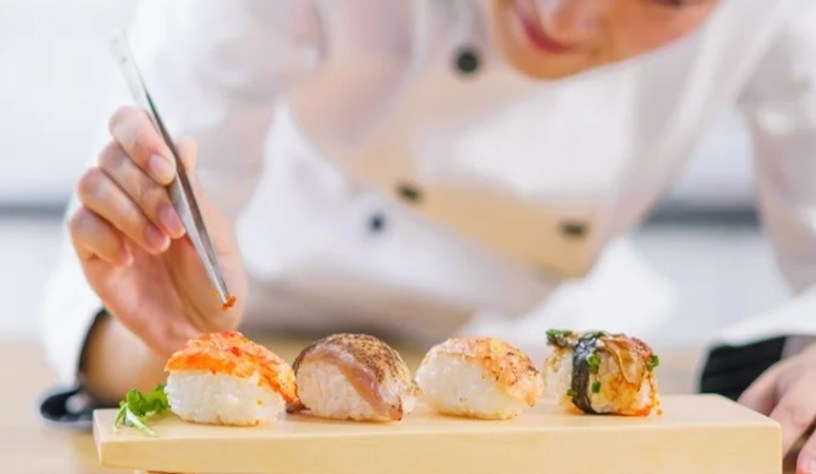
Creating the perfect sushi involves more than just fresh ingredients—it is a precise culinary art that balances timing, pressure, and composition. Each factor plays a crucial role in achieving the ideal texture, flavor, and presentation, making sushi both a technical and sensory experience.
Timing: The Key to Freshness
Timing is essential at every stage of sushi preparation. From sourcing fish to cooking rice, each element must be handled promptly to preserve quality. Fish should be prepared and served shortly after delivery to maintain optimal flavor and texture. Rice, on the other hand, requires precise cooking and resting times to achieve the perfect stickiness and temperature. Proper timing ensures that each component is at its peak when combined, resulting in sushi that is both flavorful and safe to eat.
Pressure: Shaping the Perfect Bite
Pressure is critical when forming sushi, particularly for nigiri. Applying the right amount of force ensures that the rice holds together without becoming overly compact, which can affect texture and taste. Too much pressure can make the rice dense and unappetizing, while too little may cause the sushi to fall apart. Skilled chefs use controlled pressure to create a firm base that complements the fish, allowing for a satisfying bite that maintains structural integrity.
Composition: Balancing Flavor and Texture
Composition refers to the arrangement of ingredients and the harmony of flavors and textures in each piece of sushi. Selecting complementary fish, vegetables, and seasonings creates a balanced taste experience. The contrast between the soft fish, the slightly chewy rice, and the crisp vegetables enhances the overall mouthfeel. Even subtle elements, such as a dab of wasabi or a brush of soy sauce, are considered in the composition to elevate flavor without overpowering the main ingredients.
Integration of Techniques
Mastering sushi requires integrating these variables seamlessly. Timing, pressure, and composition must work together: the fish must be fresh and served at the right moment, the rice must be formed with the right pressure, and the ingredients must be balanced to create a cohesive flavor. Each step influences the others, emphasizing the precision required to produce high-quality sushi.
Continuous Practice and Attention
Sushi preparation is a skill honed through practice and attention to detail. Chefs refine their understanding of timing, pressure, and composition over years of experience, learning how slight adjustments can dramatically impact the final product. This meticulous approach ensures that each piece meets high standards for both flavor and presentation.
Understanding these preparation variables highlights why sushi is considered both an art and a science. By carefully controlling timing, pressure, and composition, chefs create a dining experience that is visually appealing, texturally satisfying, and bursting with fresh, harmonious flavors.
This post was written by a professional at Suhi Inc. Sushi Inc. is a vibrant restaurant that offers what is considered the best sushi St Pete. Opening its doors in 2013 and becoming a local staple by offering live music, traditional hand-rolled sushi, and a friendly atmosphere, our guests always have a top-notch experience. Customers love our award-winning, fresh, and creative Sushi rolls, Nigiri, and Sashimi. With a larger selection of tempura, non-Sushi, and teriyaki options, we can accommodate every taste.

